AI & Machine Learning in React Native: The Game-Changer for Mobile Apps in 2026
 Kirill LozovoiHead of Sales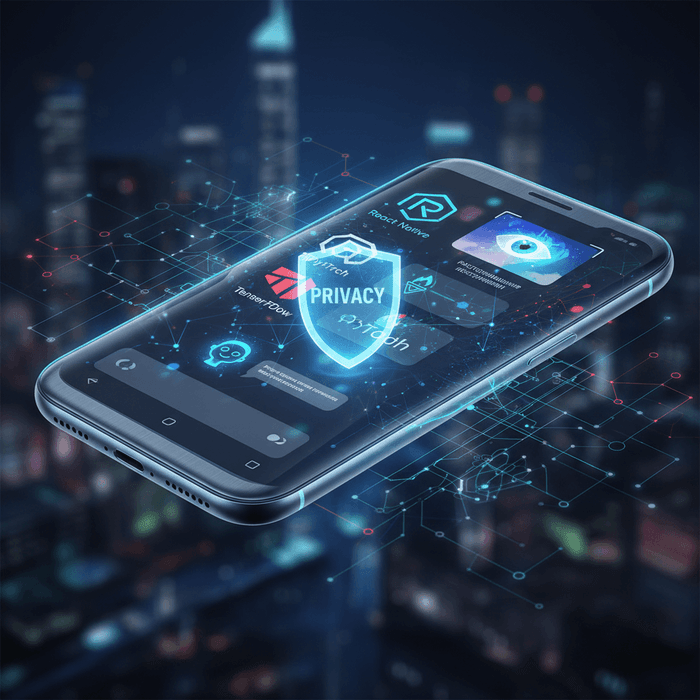
As we approach 2026, the integration of Artificial Intelligence (AI) and Machine Learning (ML) into mobile app development is not just a trend - it's a revolution. React Native, one of the world’s most popular cross-platform frameworks, stands at the forefront of this transformation. Today, forward-thinking developers are leveraging AI and ML to build smarter, faster, and more engaging apps that run seamlessly on every device.
Why AI/ML Integration Matters More Than Ever
AI and Machine Learning are moving from novelty features to essential layers within modern apps. By 2026, experts agree: mobile applications without embedded intelligence will simply be left behind. AI is now woven deeply into the development lifecycle - reshaping everything from user experience to security.
Key Technologies Accelerating AI in React Native
On-Device AI Models:
Thanks to integrations with TensorFlow Lite and PyTorch, React Native apps are running machine learning models directly on user devices. This brings advantages like instant response (ultra-low latency), robust privacy (data never leaves the device), offline capability, and significant cost savings by reducing dependency on cloud servers.
TensorFlow.js for Real-Time ML:
TensorFlow.js enables real-time AI tasks - like image recognition, pose detection, and natural language processing - right inside React Native apps. With GPU acceleration, apps can now analyze photos, power chatbots, and deliver instant insights, even without an internet connection.
Hermes Engine Optimization:
The Hermes JavaScript engine, being widely adopted in 2026, is specifically optimized for AI and ML workloads. Developers benefit from faster execution, improved memory management, and better battery life - key for running compute-heavy models on mobile devices.
Real-World Applications Leading the Pack
Image & Object Recognition: Identify objects, plants, or landmarks instantly - no cloud required.
Conversational Interfaces: AI-powered chatbots understand user intent locally, offering privacy-first virtual assistants.
Personalization on the Fly: Content, layout, and app logic adjust in real time based on user preferences and behavior.
Predictive Analytics: Anticipate user needs, automate suggestions, and deliver proactive support.
Security Enhancements: On-device AI detects fraud or malicious behavior in real time and boosts biometric authentication. How Are Developers Building for 2026?
Modern React Native apps implement three standard architectural patterns:
-
Offline-Only AI: All processing is local. Ideal for privacy or areas with poor connectivity.
-
Hybrid Approach: Most tasks are handled on-device; complex cases use cloud services as fallback.
-
Cloud-Fallback: For maximum accuracy, low-confidence predictions are escalated to cloud-based AI.
Strategies for Performance & Optimization
To ensure fast, energy-efficient AI/ML, 2026’s top teams employ techniques such as:
- Model quantization (to reduce size and computation)
- Pruning (removing unneeded model parts)
- Delegate tuning for hardware like GPU/Neural Engines
These optimizations minimize latency and battery usage while maintaining high accuracy.
The Business and Platform Impact
In 2026, organizations treating AI/ML as core architecture - not just an add-on - gain the edge. Gartner and industry experts predict the rise of AI-native platforms where development, deployment, and innovation happen in a fully intelligent environment. The result?
- Shortened design and iteration cycles (AI-generated UI/UX)
- AI-driven QA and automated testing
- Responsive, adaptive mobile experiences previously impossible
- Conclusion: AI/ML in React Native - Not Just Relevant, But Revolutionary
The integration of Artificial Intelligence and Machine Learning into React Native defines what it means to build a “smart” app in 2026. This shift is redefining privacy, performance, and user experience standards for mobile apps worldwide.
If you’re building React Native applications, it’s time to make AI and ML a foundational part of your strategy - not simply a feature, but the fabric of your product. The future is intelligent - and it’s happening now.